By NewsifyHQ Desk
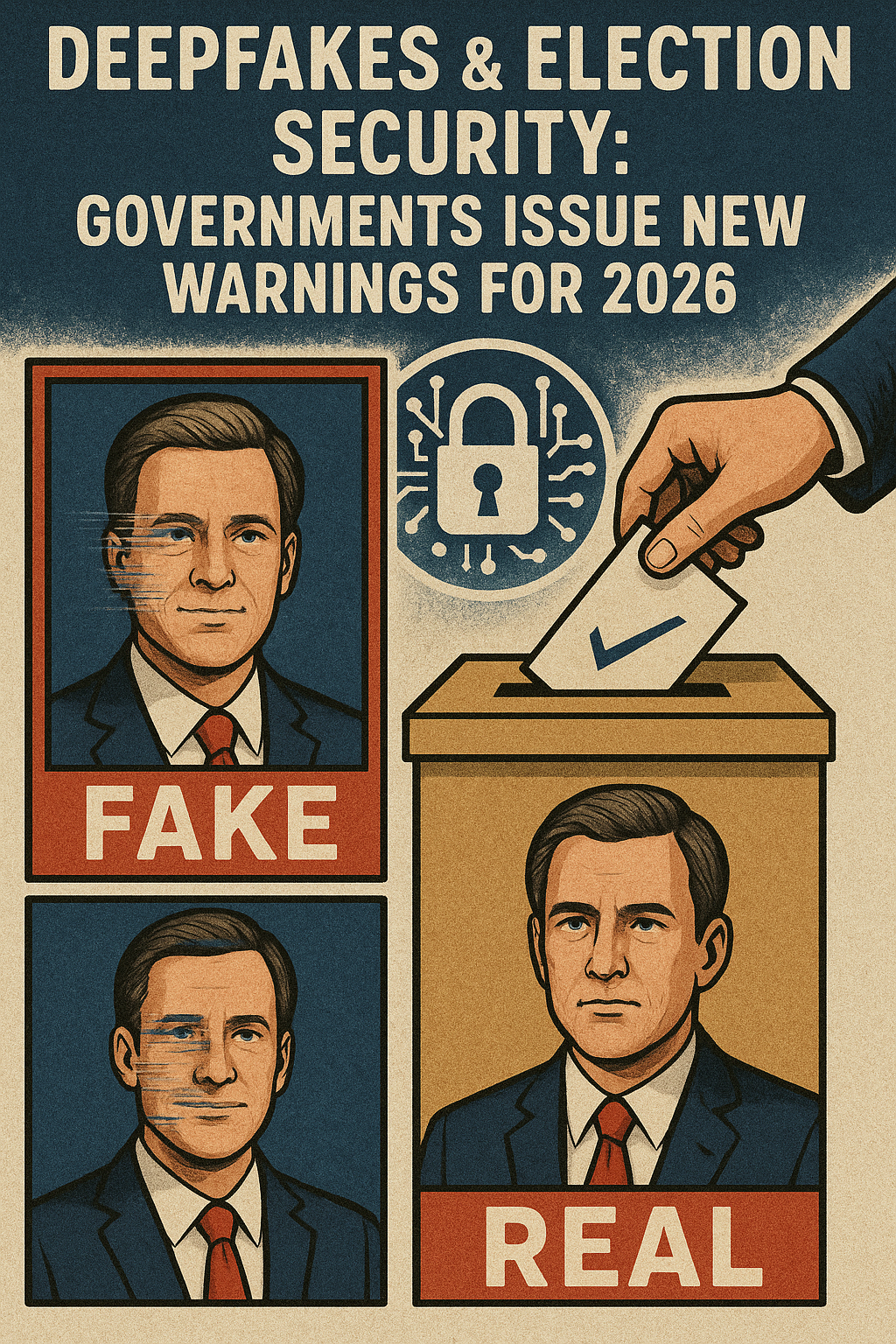
Artificial intelligence is reshaping politics at a pace faster than governments can respond. As the world moves toward the 2026 global election cycle, cybersecurity agencies across the U.S., Europe, Asia, and Africa are intensifying warnings about the rapidly growing threat of AI deepfakes—hyper-realistic synthetic media designed to mislead voters, manipulate public opinion, and destabilize democratic systems.
Governments now consider deepfake-driven misinformation one of the top three digital threats for the upcoming elections. With more than 40 countries heading to the polls in 2026, the timing could not be more critical.
Deepfakes Have Become Election Weapons
Just three years ago, deepfakes were mostly crude, uncanny video edits circulating on niche internet forums. Today, they are:
-
Hyper-realistic
-
Emotionally convincing
-
Real-time generated
-
Spread instantly through TikTok, X (Twitter), WhatsApp, and YouTube
Cybersecurity experts describe modern deepfakes as “indistinguishable from reality.” AI can now:
-
Clone a politician’s voice from a 5–10 second audio clip
-
Generate fake press conferences
-
Simulate policy announcements
-
Fabricate scandal videos
-
Create staged protests or violence
Many of these fakes are designed with a single goal: to influence voters before fact-checkers can react.
Governments Sound the Alarm
United States
The U.S. Cybersecurity and Infrastructure Security Agency (CISA) released a briefing warning of “unprecedented synthetic influence operations” in 2026. The report states that hostile state actors and domestic extremist groups may deploy deepfakes to:
-
Spread fake election-night results
-
Create false concession speeches
-
Impersonate candidates or officials
-
Announce fake policy positions
The U.S. is building rapid-response verification teams to monitor viral political content in real time.
European Union
EU officials are preparing a stricter version of the AI Act—requiring platforms to label AI-generated political content. However, enforcement remains difficult, especially across messaging apps.
South & Southeast Asia
Countries like India, Indonesia, Malaysia, and the Philippines are most concerned about WhatsApp-forwarded deepfakes that travel across millions of phones within minutes.
Africa & South America
Election commissions fear that deepfakes could trigger political violence or riots in regions with existing tensions.
How Deepfakes Could Disrupt 2026 Elections
1. Fake Scandals
An AI-generated video showing a politician engaging in illegal behavior could swing public opinion—even after it is disproven.
2. False Policy Announcements
Deepfakes could announce fake tax cuts, military actions, or diplomatic decisions.
3. Fake Election Night Videos
Synthetic “breaking news” clips may circulate before official results.
4. Deepfake Robocalls
U.S. voters have already received AI-cloned voice calls impersonating officials.
5. Fake Endorsements
Influential figures could appear to support a candidate—even if they never did.
Election authorities warn that speed is the enemy. A fake video shared at the right time could shift millions of opinions before a correction is issued.
Platforms Are Preparing—but Slowly
YouTube, Meta, X, and TikTok have announced new labeling tools for synthetic videos.
However:
-
Not all deepfakes trigger platform detection
-
New tools allow users to bypass automated checks
-
Open-source models are impossible to regulate
A 2025 study found that 82% of deepfake videos go viral before platforms take them down.
Are Voters Ready?
Surveys across multiple countries reveal:
-
67% of voters cannot identify deepfake videos
-
72% fear AI will influence elections
-
51% trust political videos less than before
This loss of trust could become a crisis on its own.
Conclusion
With generative AI accelerating and deepfake detection falling behind, the 2026 elections are set to be the first truly AI-driven political battleground. Governments are racing against time to prepare, but synthetic misinformation is likely to play a major role in shaping political narratives worldwide.
The world is entering an era where truth is no longer guaranteed—and verification is the new necessity.
Comments (0)